


Tile Adhesive Open Time: What it is and How to Extend it
In the global construction and tiling industry, project success hinges on mastering a single, critical parameter: the open time of tile adhesive. Whether installing large-format porcelain in a Dubai skyscraper or ceramic tiles in a São Paulo residence, the workability window directly dictates bond strength, durability, and finish quality.
A recent industry report revealed that over 40% of tile detachment issues stem from insufficient open time, making this parameter a top concern for contractors, architects, and material suppliers alike.
This definitive guide demystifies tile adhesive open time, explores the global factors that shorten it, and details how superior water retention—Hydroxypropyl Methyl Cellulose(HPMC) and Methyl Hydroxyethyl Cellulose(MHEC) are engineered to extend it, ensuring tile adhesive reliability for global construction needs.
What is Tile Adhesive Open Time?
In simple terms, Open Time is the maximum period after spreading the adhesive onto a substrate during which tiles can be successfully applied and still achieve full bond strength. It’s your "working window."
Think of it in two phases:

- Pot Life: The time after mixing during which the adhesive remains usable in the bucket.
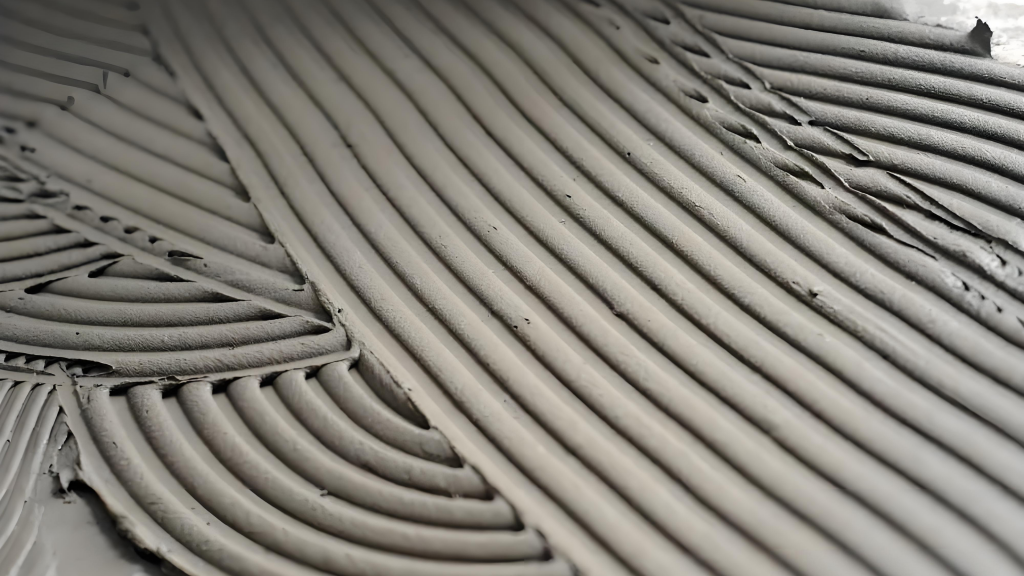
- Open Time (or Adjustability Time): This starts the moment the adhesive is notched with a trowel onto the surface. During this period, you must place and adjust your tiles.
Once the open time expires, a skin forms on the adhesive surface due to moisture evaporation into the air and absorption by the substrate. Tiling over this "skinned" adhesive results in a weak bond, hollow spots, and eventual tile failure.
According to the EN 12004 standard—the European benchmark for tile adhesives—minimum open time requirements vary by product class. For example, basic C1-class adhesives require at least 20 minutes of open time, while high-performance C2TE-class products (used for large tiles or exterior applications) often need 60 minutes or more.
Key Factors Affecting Tile Adhesive Open Time
Three core variables control open time, with only one being fully controllable at the formulation stage.
1. Climate Conditions (The Uncontrollable Factor)
Temperature, humidity, and airflow are decisive. A 10°C temperature rise can cut open time by 30%. In Riyadh's summer (45°C+), unmodified adhesive may be workable for under 10 minutes. Conversely, high humidity in regions like Mumbai can alter curing dynamics, demanding precise additive selection.
2. Substrate Properties
Absorptive materials—aerated concrete, plaster, gypsum board—act like sponges, pulling water from the adhesive. In markets like India and Southeast Asia, where such substrates are common, open time can be reduced by up to 50% compared to non-porous surfaces.
3. Adhesive Formulation (The Controllable Factor)

This is where quality is engineered. The type and performance of water-retention agents—specifically cellulose ethers like HPMC and MHEC—are fundamental. They form a protective colloid film that locks in moisture, directly countering the environmental and substrate challenges.
Please Note: The consequences of ignoring open time are costly. In tropical regions like Southeast Asia, where high temperatures (35°C↑) and humidity accelerate water evaporation, standard adhesives may lose workability in as little as 15 minutes. This forces contractors to rush installations, increasing the risk of misalignment and rework. Conversely, in dry Middle Eastern climates, porous substrates like aerated concrete absorb moisture from the adhesive even faster, further shortening the adjustable period.
Why is Managing Open Time Critical for Tiling Success?
From Brazil's humid coast to the dry heat of the UAE and India's monsoon seasons, inadequate open time leads to universal issues:
Material Waste: Adhesive that skins over prematurely cannot be re-troweled and must be scraped off and discarded, increasing project costs.
Reduced Labor Productivity: Crews are forced to mix impractically small batches and work in tiny sections to "beat the clock." This pressured pace slows overall progress, increases labor hours, and elevates the risk of errors.
Compromised Installation Quality: Rushing against a shortening open time leads to poor tile alignment, inadequate coverage, and inconsistent lippage. The resulting weak bond creates hollow spots, leading to eventual tile delamination, cracking, and callbacks that damage a contractor's reputation.
Project Delays: Correcting a failed installation is a time-intensive process of removal, substrate re-preparation, and re-tiling, causing significant schedule overruns and financial penalties.
Therefore, integrating high-performance additives is not a luxury but a necessity for quality assurance and profitability on any global project.
How to Prolong Open Time Effectively?

The primary solution for extending open time lies in formulating with advanced cellulose ethers. These polymers retain water, improve lubrication, and provide sag resistance.
The two most critical cellulose ethers for modern tile adhesives are:
1. Hydroxypropyl Methyl Cellulose (HPMC)
Hydroxypropyl Methylcellulose(HPMC) is the foundational and most widely utilized cellulose ether in tile adhesive formulations globally. Its primary function is to act as a powerful water-retention agent. It works by creating a colloidal network that traps water, slowing evaporation and substrate absorption. This mechanism is the cornerstone of extended open time.
The performance of HPMC is not monolithic. It is finely tuned by its key characteristics:
- Viscosity Grade (e.g., 40,000–200,000 mPa·s): Tailors sag resistance and workability. For instance, adding 0.3–0.5% of JINJI's HP GT100000 to a C2 adhesive can extend open time from 20-30 to 45-60 minutes.
- Chemical Substitution Ratios: Determine solubility, surface activity, and the gel temperature—the point at which it thickens and loses efficacy under heat.
- Multifunctionality: Beyond water retention, HPMC enhances lubrication, adhesion, and overall mortar consistency.
Due to its excellent balance of performance, reliability, and cost-effectiveness, HPMC remains a staple ingredient in a vast array of standard and improved tile adhesive formulations worldwide.
2. Methyl Hydroxyethyl Cellulose (MHEC)
MHEC also is a important water retention agent in tile adhesive formulations. But its key advantage is a significantly higher gel temperature than HPMC, allowing it to maintain viscosity, workability, and water retention under severe heat, making it ideal for sun-exposed facades or hot climates.
Its benefits include:
- Superior Water Retention Under Duress: MHEC excels in harsh conditions—high temperature, low humidity, and on highly absorbent substrates—providing a longer and more predictable open time window where it is needed most.
- Optimized Performance Balance: Extends open time without proportionally sacrificing critical slip resistance on vertical surfaces.
Therefore, MHEC is strategically specified in premium, high-performance, and large-format tile adhesives where guaranteed performance under thermal stress and maximum application reliability are required.
Choosing between HPMC and MHEC depends on the adhesive performance tier, local climate, substrate types, and cost considerations. For high-stress, high-temperature, or demanding commercial applications in India, MHEC is frequently the additive of choice.
Regional Case Studies: JINJI HPMC & MHEC Products in Action
JINJI’s HPMC and MHEC have been proven effective across diverse global markets, providing tailored solutions to unique climate and substrate challenges. The following table illustrates how our products deliver measurable results.
|
Region |
JINJI Solution |
Application & Result |
|---|---|---|
|
Southeast Asia |
Product: MHEC |
Location: Mumbai, India. |
|
Middle East |
Product: HPMC |
Location: Dubai, UAE. |
JINJI CHEMICAL: Your Trusted Partner for High-Performance HPMC
When the integrity of your tiling project hinges on the reliability of additives, partnering with a proven manufacturer is essential. As a leading HPMC source factory, JINJI CHEMICAL always serve the construction materials manufacturer with a commitment to quality and consistency.
Understanding the stringent demands of the tile adhesive market, JINJI CHEMICAL offers a comprehensive range of HPMC and MHEC products tailored for tile adhesive mortars. Our products are manufactured under strict quality control to ensure:
Batch-to-Batch Consistency: Critical for adhesive manufacturers to maintain stable product performance.
Optimized Substitution and Viscosity: Providing the ideal balance of water retention, open time extension, and sag resistance.
Excellent Dispersion and Solubility: Ensuring smooth mixing without clumping, both in factory production and on-site.
Practical Tips for Manufacturers & Contractors
Even with a well-formulated adhesive, best practices are crucial:
- Substrate Priming: ALWAYS use a suitable primer on porous surfaces. This is the single most effective on-site action to slow moisture absorption and extend open time.
- Climate Control: When possible, avoid tiling in direct sunlight, high heat, or strong drafts. Use barriers, tents, or schedule work for cooler parts of the day.
- Batch Management: Mix only as much adhesive as you can use within its pot life.
- Follow Manufacturer Guidelines: Adhere strictly to the recommended mixing water, slaking time, and substrate preparation. Using excess water weakens the final adhesive.
Open Time: The Foundation of Flawless Tiling
Open time is the silent guardian of tiling quality. Neglecting it compromises the entire installation.
The strategic use of HPMC and MHEC in tile adhesive formulations transforms a race against the clock into a controlled, efficient process. It empowers workers to focus on precision alignment and perfect placement, ultimately delivering installations that are not only beautiful but also durable and reliable for years to come.
Ready to optimize your tile adhesive formulations? Contact JINJI CHEMICAL today for a free sample of HPMC/MHEC and personalized technical support. Visit www.jinjichemical.com or email contact@jinjichemical.com to learn more.