


Technical Insight: Selecting the Optimal HPMC Cellulose for Cementitious Tile Adhesives
The global construction chemicals market continuously demands high-performance additives to enhance the workability and durability of modern building materials. Among these, Hydroxypropyl Methylcellulose, commonly abbreviated as HPMC, serves as an indispensable thickener and water retention agent in tile adhesive formulations.
Manufacturers and exporters catering to diverse international markets must navigate the distinct preferences of end-users, which are primarily driven by local climate conditions, labor habits, and regional cost considerations. To satisfy these varying requirements, chemical production lines typically yield two processing variants of cellulose ethers: hot-soluble HPMC and instant HPMC.
Choosing the right HPMC variant directly dictates job site success and factory profitability.
Choosing the appropriate grade requires a thorough examination of their chemical behaviors upon water contact.
The Mechanical and Economic Dynamics of Hot-Soluble HPMC
Evaluating how non-surface-treated cellulose ether behaves reveals its specific advantages in industrial applications.
Advantages of Hot-Soluble HPMC
Hot-soluble HPMC are manufactured entirely without additional chemical surface-treatment steps. The complete absence of post-treatment processing translates directly into lower manufacturing costs, allowing chemical producers to offer highly competitive pricing structures to their distribution networks.

For cost-sensitive infrastructure markets, such as those across India and various regions within the Middle East, this strict budgetary advantage serves as a crucial, non-negotiable determinant in raw material selection during the procurement phase. Therefore, hot-soluble HPMC delivers maximum cost efficiency in price-sensitive markets.
It integrates flawlessly during high-shear dry-blending.
In institutional dry-mix mortar facilities, hot-soluble HPMC exhibits flawless incorporation when combined mechanically with cement and sand. During this automated dry-blending process, the dense solid aggregates thoroughly separate the individual polymer particles before any liquid is introduced. Consequently, when the pre-blended mortar matrix arrives at the job site and encounters water, the HPMC dissolves seamlessly without any undesirable clumping, enabling immediate, uniform, and reliable viscosity development throughout the entire wet mortar batch.
It also ensures remarkable chemical resilience under heat.
Hot-soluble HPMC offers superior chemical resilience and thermal stability, ensuring highly reliable performance in extremely hot climates where ambient temperatures frequently surpass 40°C. It retains its intrinsic water retention capacity efficiently, preventing premature moisture loss into porous substrates even under intense thermal stress.
Disadvantages of Hot-Soluble HPMC
It demands strict, disciplined mechanical mixing protocols; Without factory pre-blending, raw hot-soluble polymer chains interact too rapidly with moisture, creating severe application bottlenecks.
For example, when raw powder is directly introduced into water, the outer layer hydrates instantly upon contact with cold water, forming a dense gel-like membrane that blocks further water penetration into the core particles.
This mechanism generates persistent “fish-eye” agglomerates, reducing effective polymer utilization and ultimately weakening adhesive strength and uniformity in tile mortar systems.
The Field Performance and Formulation Characteristics of Instant HPMC
Surface-modified cellulose ethers offer a completely altered hydration timeline designed to solve manual mixing challenges.
Field Application Benefits of Instant HPMC Grades
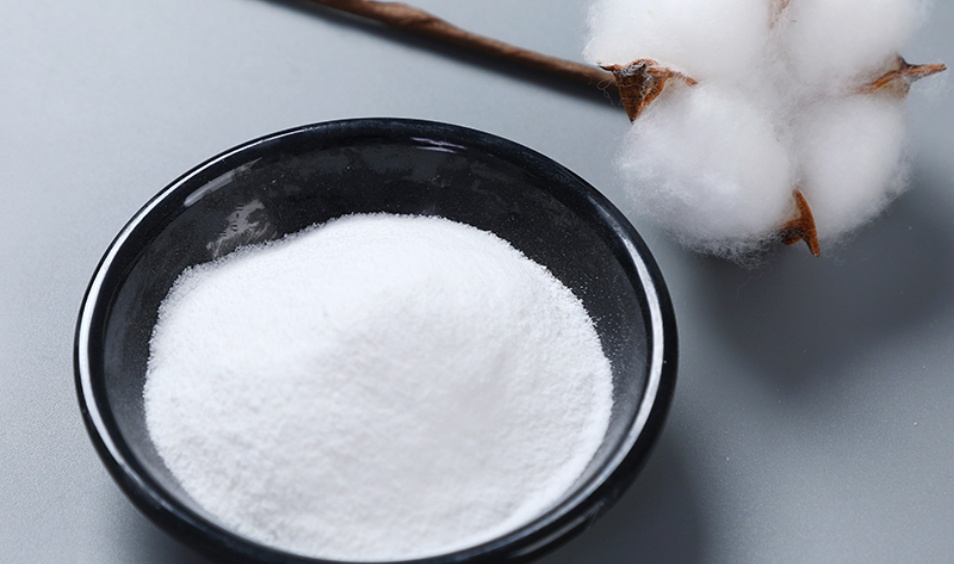
Instant HPMC undergoes a specialized chemical surface-treatment process. This structural modification helps less clumping during the initial wetting stage. Even under uncontrolled manual mixing conditions, it disperses completely into a smooth slurry before the chemical delay mechanism deactivates and viscosity develops.
Instant HPMC eliminates aggregate clumping and dramatically extends open time.
By managing the precise rate at which water is immobilized during the first few minutes of mixing, the instant adhesive resists rapid surface skinning when combed onto a substrate. This extended open time provides tile installers with a significantly longer window to position, realign, and adjust ceramic or large-format vitrified tiles, drastically reducing the occurrence of structural hollows, unbonded sections, and costly subsequent bonding failures.
Once the surface-treatment layer dissolves, rapid thickening occurs.
The fully uncoiled polymer chains quickly build a heavy, cohesive, and exceptionally creamy consistency. This swift transition from a low-viscosity slurry to a non-sagging mortar paste provides excellent initial grab
Processing Drawbacks and Environmental Sensitivities of Instant HPMC
Core drawback: higher cost due to added surface-treatment complexity.
Surface modification introduces additional processing steps and specialized raw materials, which increases manufacturing complexity and results in a higher factory-gate cost compared to hot-soluble grades.
In application environments with high alkalinity or elevated temperatures, the delayed-release coating system can become unstable, leading to premature hydration and reduced control over viscosity development.
This instability stems from the sensitivity of the engineered surface layer, which governs the timing of water penetration and can be disrupted under aggressive chemical or thermal conditions
Geographic Allocation Strategies for Global Distribution Channels
Matching the right variant to regional infrastructure ensures a competitive edge in international trade.
Aligning Product Portfolios with Regional Construction Practices
Exporting cellulose ethers successfully requires a strategic alignment of product characteristics with the local infrastructure of destination countries.
For markets like Africa, Mexico, and Brazil—where manual on-site mixing remains widespread and job sites demand flexible material handling—instant HPMC stands out as the ideal recommendation.
By contrast, in markets such as India and the Middle East, where dry-mix mortar plants and pre-blended systems are more established, hot-soluble HPMC is more commonly adopted.
In addition, for fully automated dry-mix manufacturing operations, hot-soluble HPMC remains the preferred industrial-grade option. Factory-scale high-shear blending ensures complete particle dispersion prior to hydration, eliminating clumping risks while maximizing cost efficiency and thermal stability advantages of unmodified systems.
Ready to optimize your formulation performance and reduce manufacturing overhead? Contact the JINJI CHEMICAL Technical Export Team Today to request complimentary product samples tailored to your region's climate and mixing habits. Let us help you determine the ideal balance of open time, viscosity control, and cost efficiency for your specific tile adhesive line.