


Redispersible Polymer Powder: Performance Enhancement for Thin-Set Mortars on EPS & XPS Panel
Are you an EPS or XPS thin-set mortar manufacturer striving to outperform competitors with a superior, more reliable product? Or perhaps you’re a distributor of construction chemicals, looking to offer your clients a definitive advantage in the booming External Wall Insulation(EWI) and finishing systems market?
If so, there’s one ingredient that stands as the cornerstone of modern, high-quality formulation: Redispersible Polymer Powder (RDP). Moving beyond basic cement-and-sand mixes, RDP is the secret weapon that transforms a brittle, potentially problematic coating into a durable, flexible, and long-lasting protective skin for insulation boards.
In this comprehensive guide, we’ll dive deep into the science and practical benefits of RDP in EPS and XPS applications. We’ll explore not just what it does, but how it works, and why overlooking its role could be costing you in terms of product performance, customer satisfaction, and ultimately, market share.
Why General Cement Mortars Fail on EPS/XPS Panel?
Expanded Polystyrene (EPS) and Extruded Polystyrene (XPS) are fantastic thermal insulators, but they present unique challenges for the mortars applied to them:
Low Surface Energy & Smoothness: Especially with XPS, the surface is closed-cell and smooth, offering poor mechanical key for a rigid mortar.
Dimensional Movement: Insulation boards and substrates (concrete, brick) expand and contract at different rates due to thermal cycles and moisture changes. A rigid mortar cannot accommodate this movement, leading to cracking.
Flexural Demands: The entire insulated façade is a composite system subject to wind load, impact, and subtle shifting. The mortar layer needs inherent flexibility and toughness.
Water Management: While the insulation itself is hydrophobic, the mortar layer must repel liquid water yet allow water vapor to escape (high breathability) to prevent trapping moisture and subsequent issues like mold, algae, or freeze-thaw damage within the system.
A traditional, unmodified mortar is simply too rigid, brittle, and poorly adhesive to meet these demands. This is where polymer modification becomes important and non-negotiable for EPS/XPS panel.
What Exactly is RDP Powder and How Does it Work in the Mortar Matrix?
Redispersible Polymer Powder is a free-flowing, white powder produced by spray-drying a specific polymer emulsion (most commonly Vinyl Acetate-Ethylene or VAE). This process creates powder particles that encapsulate the polymer’s “latent” properties.
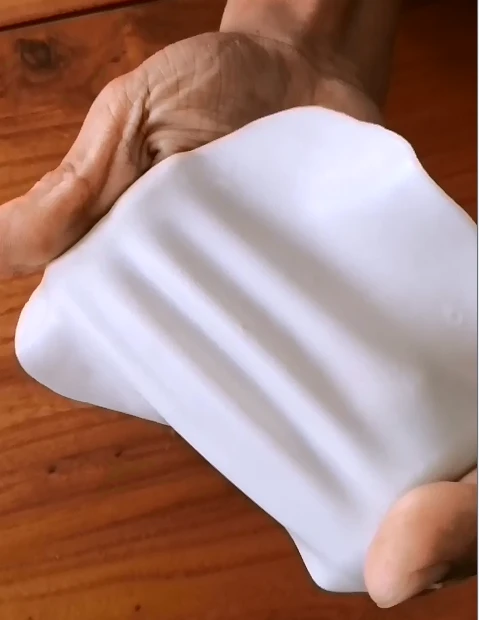
During the mixing of your dry-mix mortar with water, a magical reversal happens:
Redispersion: The RDP powder particles readily redisperse in water, re-forming a stable polymer emulsion.
Film Formation: As the mortar hydrates, cures, and eventually dries, this polymer emulsion coalesces. The polymer particles fuse together, forming a continuous, flexible film that binds itself intimately to the cement hydrate crystals and aggregate particles.
3D Network Creation: The result is not just a cement matrix or a polymer matrix, but a sophisticated, co-matrix. The polymer film forms a cohesive, flexible network that interlocks with the rigid, mineral structure of the hardening cement.
This synergistic co-matrix is the source of all the performance enhancements.
The Multifunctional Power of RDP in Your Mortar Formulation
Let’s translate this science into tangible, marketable benefits for your mortar products:
1. Dramatically Improved Adhesion & Cohesion
This is the primary function. The polymer film has excellent adhesive properties, forming a strong bond to both the often-difficult EPS/XPS surface and the underlying substrate. It significantly increases:
Adhesive Strength: Both initial grab and final bond strength, reducing the risk of delamination.
Cohesive Strength: The internal strength of the mortar itself is enhanced, meaning failure is less likely to occur within the mortar layer.
Key Message for Manufacturers: High RDP content directly correlates to superior pull-off adhesion test results, a critical quality assurance metric for system approvals and specifier confidence.
2. Unmatched Flexibility & Crack Resistance
The flexible polymer network acts as a microscopic shock absorber. When stresses occur due to thermal movement, substrate shifting, or impact, the polymer films can stretch and deform, dissipating energy.
This greatly increases the mortar’s elastic modulus, flexural strength, and deformation capacity.
It transforms the mortar from a rigid material to a flexible one, effectively bridging micro-cracks that would otherwise propagate and become visible.
Key Message for Distributors: You’re not just selling a mortar; you’re selling system integrity and long-term aesthetics. Cracked facades are the number one call-back complaint. RDP is your insurance against it.
3. Superior Water Resistance & Hydrophobicity (Modified RDP Powder)
While the mortar must remain breathable, it must repel driven rain. The polymer film reduces the capillary pore volume and can be specially modified to be hydrophobic.
Lower Water Absorption: This protects the insulation layer and substrate from water ingress.
Maintained Vapor Permeability: The right RDP allows water vapor to escape, preventing moisture entrapment.
Freeze-Thaw Durability: By limiting water uptake, RDP dramatically improves resistance to cyclic freezing and thawing, a key factor in longevity.

4. Increased Abrasion and Impact Resistance
The tough polymer network makes the hardened mortar surface more resistant to mechanical wear, scraping, and light impacts. It is very important during construction and over the building’s lifetime.
Choosing the Right RDP: A Strategic Guide for Mortar Formulators
Not all RDP powder are created equal. For EPS/XPS mortars, specific characteristics are paramount:
Glass Transition Temperature (Tg): This is critical. For exterior, flexible mortars, you need an RDP with a low Tg (typically below 0°C, often around -5°C to -10°C). A low-Tg polymer remains flexible and film-forming even in cold temperatures. A high-Tg polymer will be hard and brittle at service temperatures, negating the flexibility benefit.
Hydrophobic vs. Standard: For basecoats in rainy regions, hydrophobic RDP (e.g., JINJI RDP8034S) provide an extra layer of water protection. For finishing coats, standard RDP (e.g., JINJI RDP5001) might suffice, focusing more on flexibility and adhesion.
Compatibility with Additives: Ensure your RDP works synergistically with other key additives like hydroxypropyl methyl cellulose (HPMC), fibers, and air-entraining agents. A good supplier will provide formulation support.
Dosage: Performance is dose-dependent. Basecoat mortars for direct board adhesion typically require higher polymer dosages compared to finishing topcoats. Adding sufficient RDP powder in your mortars is necessary for premium performance.
Specific Formulations for Different Climate
This is where local expertise matters. An RDP formulation for the hot, arid climate of the Middle East will differ from one designed for the freeze-thaw cycles of Northern Europe or the humid, rainy conditions of Southeast Asia.
Hot/Dry Climates: Focus on extended open time, strong water retention, and prevention of plastic shrinkage cracks.
Cold/Freeze-Thaw Climates: Emphasize low-Tg RDP for cold flexibility, exceptional water repellency, and optimized air-void structure.
Humid/Rainy Climates: Prioritize hydrophobic RDP types and rapid rain resistance development.

Partnering with an RDP supplier who understands these regional nuances is a significant competitive advantage.
Case in Point: Solving Monsoon Challenges in Sri Lanka
A Sri Lankan insulation manufacturer faced persistent failures: their thin-set mortar on EPS boards absorbed monsoon rains, leading to adhesion loss and algae. JINJI CHEMICAL’s intervention involved a reformulation synergizing HPMC for workability/water retention and a hydrophobic VAE-based RDP for flexible adhesion and water repellency.
Results:
45% increase in tensile adhesion strength after water immersion.
Water absorption reduced by over 60%.
Eliminated field reports of delamination and significant cracking.
Improved contractor satisfaction due to better application in high heat.
This shift provided a decisive competitive edge for their mortar products in a quality-conscious market.
Why Leading Mortar Manufacturers and RDP Powder Distributors Partner with JINJI CHEMICAL?
Choosing the right and trusted RDP supplier is a strategic decision. JINJI CHEMICAL stands out by offering:
Uncompromising Quality & Consistency: Batch-to-batch uniformity ensures your mortar performance is reliable and predictable.
Deep Technical Expertise & Support: We go beyond selling powder; we partner in optimizing your formulation for local raw materials, climate, and performance targets.
Specialized Product Portfolio: From standard to hydrophobic grades, we offer RDPs tailored for specific application challenges.
Global Reliability with Local Insight: Our robust supply chain ensures timely delivery, supported by an understanding of regional market needs.
Conclusion: Why RDP is Your Non-Negotiable Investment

In the competitive landscape of construction chemicals, quality is the ultimate differentiator. For EPS and XPS thin-set mortars, Redispersible Polymer Powder is not merely an "additive"—it is the fundamental performance modifier that defines the product category.
For Manufacturers: Integrating high-quality, appropriately selected RDP into your formulations is a direct investment in product reliability, reduction of field failures and call-backs, and building a brand reputation for durability. It allows you to command a premium price and secure approvals for major projects.
For Distributors: Understanding and communicating the critical role of RDP empowers you to move beyond price-based conversations. You become a technical consultant, helping your clients solve real-world problems. Stocking and promoting RDP-supported mortar lines positions you as a supplier of high-value, system-critical solutions.
In an era where building envelope performance, energy efficiency, and longevity are paramount, the thin layer of mortar protecting the insulation is the system’s frontline defense. Don’t leave it unprotected with a sub-standard formulation.
Ready to optimize your thin-set mortar formulations for EPS & XPS panel with right Redispersible Polymer Powder? Contact our technical experts today for tailored recommendations, formulation support, and samples tailored to your specific market and performance requirements.
Choose JINJI RDP with confidence. Build for decades.